








Choosing an electric bike involves more than comparing motor power, battery capacity, and range. The braking system also deserves careful attention, especially if you ride in traffic, carry extra cargo, or regularly encounter steep hills.
When comparing hydraulic vs. mechanical disc brakes on an e-bike, the decision usually comes down to seven factors: braking feel, stopping performance, riding conditions, maintenance, repairability, ownership cost, and your typical riding environment.
Hydraulic vs. Mechanical E-Bike Brakes: Quick Comparison
1. Brake-Lever Effort: How Much Force Do You Need?
One of the most noticeable differences between hydraulic and mechanical disc brakes is the force required at the lever.
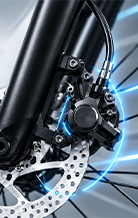
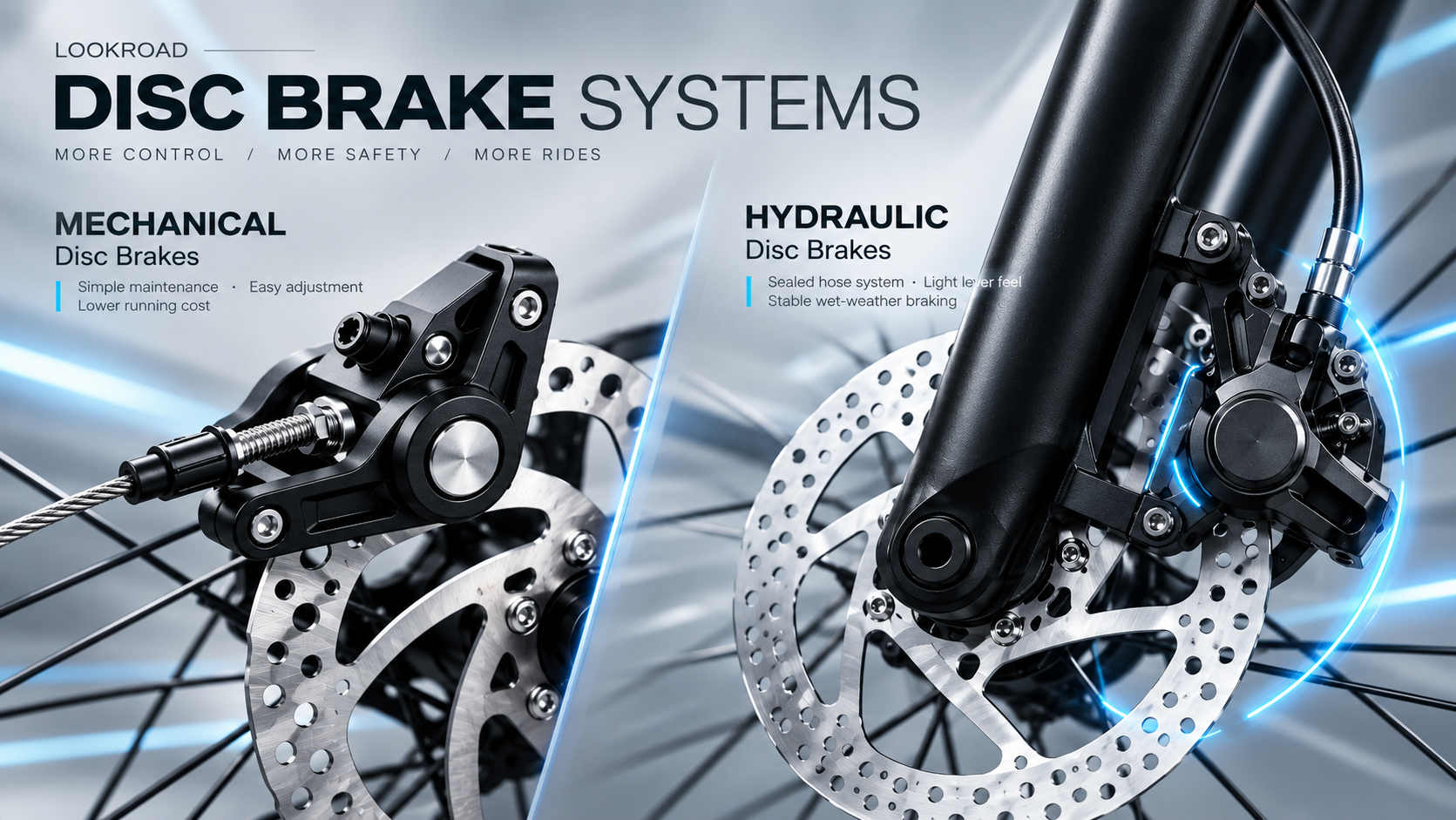
Hydraulic disc brakes
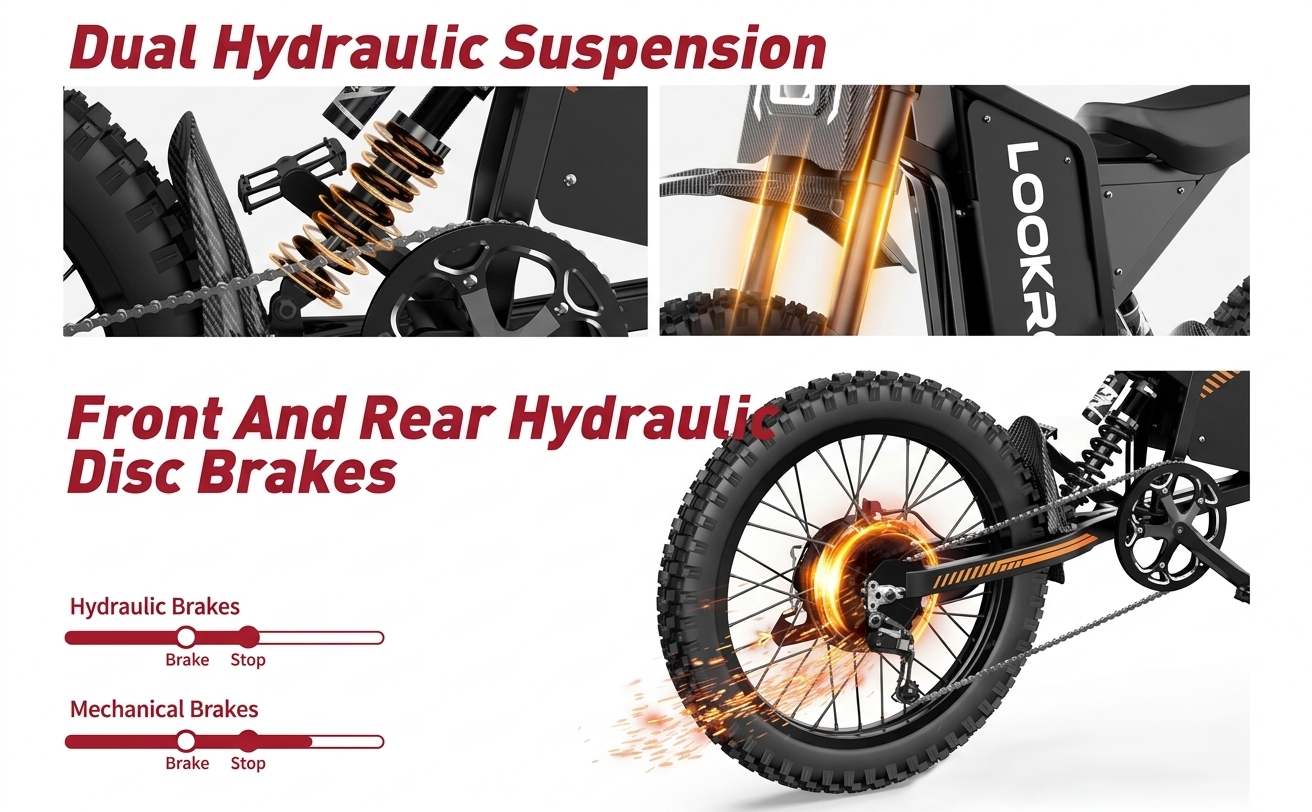
Hydraulic systems use fluid to transfer pressure from the brake lever to the caliper. This arrangement can produce strong braking with relatively little hand effort.
For e-bike commuters, riders with heavier bikes, and people who frequently slow down in traffic, a lighter lever feel can make repeated braking more comfortable.
Hydraulic brakes also tend to provide smooth modulation, meaning the rider can adjust braking force progressively rather than relying on an abrupt on-or-off response.
Mechanical disc brakes
Mechanical systems use a steel cable running from the lever to the caliper. Cable friction, cable condition, caliper design, and adjustment all influence how the brake feels.
A properly set up mechanical system can still deliver controlled, effective braking. However, some entry-level cable-actuated systems require more lever force to achieve a similar braking response.
What to compare: Instead of judging brakes by their names alone, compare lever effort, brake engagement, modulation, and stopping performance on equivalent bikes.
A heavier cargo e-bike used on long descents places different demands on its brakes than a lightweight commuter used on flat streets.
Repeated hard braking also generates heat. Brake fade can occur when the braking system becomes too hot, and hydraulic brakes are not immune to it. System design, rotor capacity, pads, speed, and riding technique all affect heat management.
How to tell Customers?
A meaningful comparison should measure stopping distance under controlled conditions, not rely solely on a manufacturer's description of braking power.
Tests should use a consistent bike configuration, starting speed, surface, load, and measurement method, preferably under qualified supervision on a controlled course. Results should state the number of trials and the conditions tested.
No stopping-distance figures are provided here because the source material does not contain controlled test results. Publishing invented measurements would mislead buyers rather than help them make an informed decision.
3. Wet Weather and Downhill Riding: Where Do the Differences Matter?
Weather and terrain are important when choosing e-bike brakes, but they should not be oversimplified.
Riding in the rain
Both hydraulic and mechanical disc brakes can be used in wet conditions. Both also have exposed brake pads and rotors, so water, dirt, and contamination at the braking surfaces can affect performance.
The sealed fluid circuit of a hydraulic brake protects the actuation system under normal operating conditions. It does not make the rotor and pads immune to rain or mud.
Riders in rainy climates should prioritize clean, properly maintained components, compatible pads, suitable tires, and predictable braking behavior.
Descending hills
Long descents require more attention to heat management than occasional braking on flat roads.
Hydraulic brakes can be attractive because of their lever feel and modulation, particularly when riders need to manage braking repeatedly. However, the brake's overall design and heat capacity still matter.
Check the manufacturer's specifications for the permitted rotor size, compatible pads, and intended use. Avoid assuming that every hydraulic brake is suitable for every heavy or high-speed e-bike.
Practical takeaway: If you regularly ride steep terrain or carry substantial loads, compare the complete braking system rather than choosing by actuation type alone.
4. Maintenance: Do Hydraulic Brakes Really Require More Work?
Maintenance is one of the most misunderstood parts of the hydraulic-versus-mechanical debate.
Hydraulic brakes can require less frequent routine adjustment, while mechanical systems are usually easier to adjust with basic tools. These are different advantages, and they should not be treated as the same thing.
Hydraulic brake maintenance
Hydraulic systems generally need periodic inspection of the pads, rotors, hoses, fittings, and lever feel.
A brake bleed may be necessary when air enters the system, after certain repairs, or as part of maintenance specified by the manufacturer. The correct fluid and procedure depend on the particular brake system.
Bleeding involves more specialized tools and procedures than a basic cable adjustment. An improperly performed service can compromise braking, so riders should follow the manufacturer's instructions or use a qualified mechanic.
Mechanical brake maintenance
Mechanical brakes are often simpler to troubleshoot and service.
Depending on the model and usage, routine work can include inspecting and adjusting cable tension, checking cable condition, correcting pad clearance, aligning the caliper, and replacing worn pads or cables.
These tasks are accessible to many home mechanics. However, adjustment frequency depends on the brake design, cable condition, riding conditions, and pad wear.
Partner With Us
We're looking for dealers, wholesalers, and distribution partners to grow with us. Contact us at [lookroad01@gmail.com] to explore flexible partnership opportunities tailored to your business.
Create. Ride. Share. Earn.
Are you a YouTuber, TikTok creator, or e-bike enthusiast? Partner with us to share your passion for riding. Reach out to [your email address] to learn more about our creator and affiliate program.